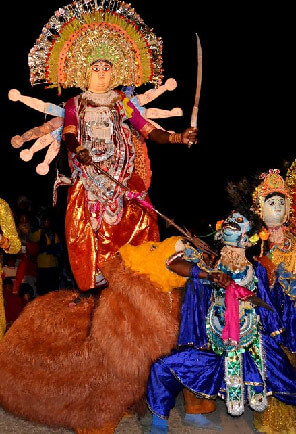
West Bengal is an enormous state, and the experience offered by it are in proportion to its size. It is dotted with heritage destinations and offers its fair share of adventure tourism. While Kolkata, its capital city, is rich in culture and boasts monuments dating back to the colonial era, there are other places which you must see if you want to enjoy the different colours of this state. You come across cities which are cultural hotspots and once served as capital of different kings and dynasties. Watching a Baul performance is as intoxicating as gorging on the sweetmeats that it is famous for.
In the northern part of the state, Duars with its tea gardens and wide open plains, appears like a well written poetry by nature. In Darjeeling, you find out the reasons behind its being called the “queen of the hills”, and as you go further up, a world symbolizing purity opens itself before your eyes. Arts and crafts, dance, music and theatre are pursed with a passion, as you find out after staying a while here. A family vacation is as appealing as a honeymoon gateway, as there are enough places catering to both. What is certain is, visiting West Bengal endows you with a rich travel experience.
Kolkata, the capital city of West Bengal, is a cultural potpourri, dotted with museums, art galleries, temples and colonial era buildings. One of the most famous of the latter is the Victoria Memorial. Recognisable from a distance by its Angel of Victory which sits atop the structure and blows with the wind, it consists of 25 galleries housing a remarkable collection of paintings, artefacts, textiles, coins and possessions belonging to the Queen. Other structures reminding you of the British presence are Bow Barracks, Calcutta High Court and St. Paul’s Cathedral. Those possessing an interest in science should head towards Birla Industrial & Technological Museum, and Science City. A day of fun and entertainment is best spent at Nicco Park and Aquatica, where the water rides, swings, rain disco and other attractions make your day. Visit the Academy of Fine Arts to enjoy a theatre performance or admire paintings displayed by famous painters.
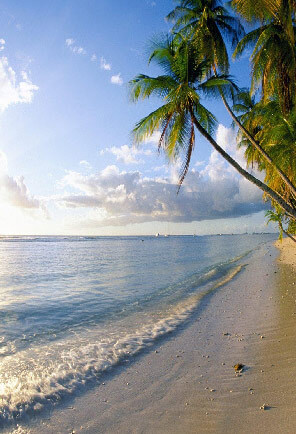
There are coastal areas in West Bengal which are blessed with gorgeous beaches, and make for a great family outing. The most popular of these is Digha. This beach extends upto 7 km and its beauty is enhanced by the presence of casuarina plantations along the bay. Tajpur is another wonderful beach located in the Purba Medinipur district of South Bengal, just 16 km before Bigha. You can spot seagulls as well as red crabs, besides enjoying the spectacular views greeting your eyes.
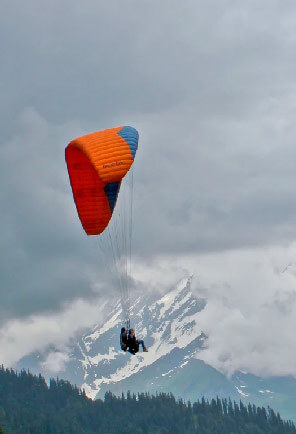
Mandarmani, located in the East Midnapore district, is another beach popular for its 13 km long motorable beach road. Other famous beaches are Junput, Shankarpur and New Digha. Arrive at some of these beaches in the early morning, and you will see fishermen setting off for an early morning catch. You can also buy some freshly caught fish from the stalls set up by the fishermen if you choose to. A variety of water sports activities are also available at Digha, with two of them being parasailing and water zorbing.
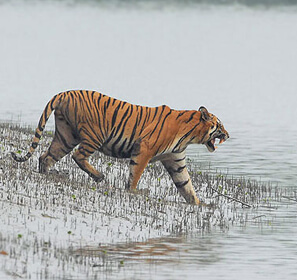
An exciting travel experience awaits visitors at the several wildlife sanctuaries and national parks in West Bengal. All of these are located in the region known as Duars. It is also called Doors because it serves as the gateway to Bhutan from India. Its economy is mainly dependent on tea and wildlife sanctuaries. The most famous of these is Jaldapara Wildlife Sanctuary which is home to the one-horned rhinoceros. It also boasts the highest rhino population in India after Kaziranga National Park in Assam. A special attraction here is the Bengal Florican, which is one of the least sighted birds in India. The topography of the park is characterized by grasslands, river banks, tall grasses covering extensive areas and streams which flow throughout the year.
Gorumara National Park is also famous for its rich collection of fauna and flora. Situated about 80 km from Jaldapara, it is famous for Asian elephants, peacocks and bisons. Wildlife in the park can be observed from the numerous watchtowers located inside the park. Some of these are Jatraprasad Watch Tower, Rhino Observation Point and Chandrachur Watch Tower. Other famous wildlife areas are Chilapata forest and Khairbari.
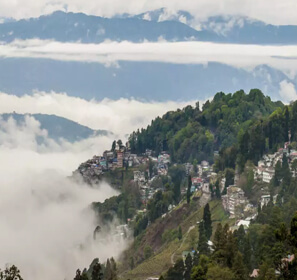
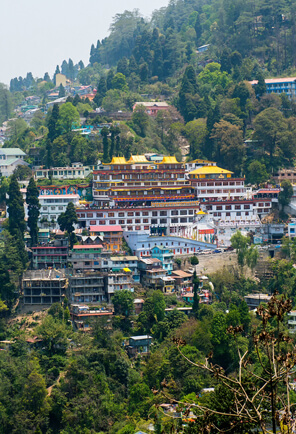
The sightseeing tourist attractions in West Bengal also include its wonderful hill stations. The most famous of these is Darjeeling, also known as the Queen of Hill Stations. Just being in this place is a treat in itself, what with its incredible scenery and pleasing weather.
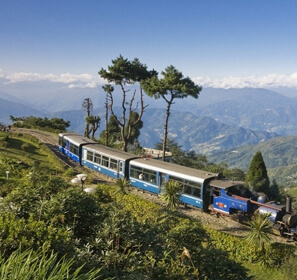
Overlooked by eastern Himalayan ranges, it offers breathtaking views of Mt. Kanchenjunga. Taking a toy train ride (a UNESCO World Heritage Site) as it gracefully makes its way through sharp bends and turns, is the way to ultimate bliss, as is watching the sunrise from Tiger Hill. You can enjoy a stroll in The Mall area or visit other tourist attractions like Shanti Stupa, Batasia Loop, Peace Pagoda, Bhutia Busty Monastery and the Darjeeling Himalayan Zoo, where you can spot the playful Red Panda. The perfect way to start a day is a breakfast at Keventers.
After Darjeeling, make your way to Kalimpong, a quiet little town situated at an altitude of almost 1200m. The natural scenery of this place along with the dominant Tibetan Buddhist culture makes it a fascination for tourists. The famous attractions here are Kalimpong Arts & Crafts Center, Tharpa Choling Monastery, Thongsa Monastery, Durpin Dhanda and Mangal Dham. At Durpin Dhanda, you can view several mountain ranges of Sikkim along with the confluence of several rivers like Relli, Riang and Teesta. At Kalimpong, you can also enjoy white water rafting along the Teesta and Rangit rivers. If you love photography, make your way to the Army Golf Club. Lolegaon, a small village in Kalimpong, is a must see tourist spot famous for a heritage forest and observation point called Jhandi Dara.
About 3 hours away from Darjeeling is Mirik, a place where you can enjoy a picnic, go boating, horse riding and explore the tea plantations. Sandakphu deserves a special mention, as it is the highest peak of West Bengal. Located at a height of 3,636 m above sea level, it is the place to come to if adventure tourism is what you are after. Trekking is the rage here, and it’s only when you reach the summit you realize what the hoopla is all about. From there, you are treated to unbelievable views of the Himalayan range. It is also famous for being the only place in the world home to rhododendron and silver fir forests. Trekking to Sandakphu starts from Manebhanjan, and covers a distance of almost 12 km. Other famous places in this region are Chitrey, Phalut, Tumling and Tonglu.
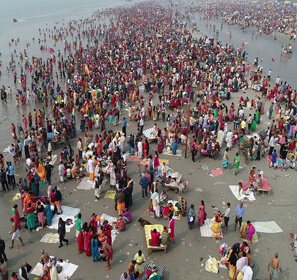
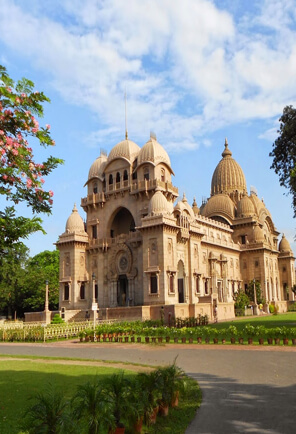
West Bengal also offers a spiritual experience as it is home to several pilgrimage destinations. One amongst them is Gangasagar. It is visited by thousands of pilgrims and visitors, as it is believed that taking a dip here cleanses one of all sins. Belur Math is also a famous place for seekers of spiritualism, and is mostly associated with Swami Vivekananda and Ramakrishna Paramhansa. It is the headquarters of Ramakrishna Math and Ramakrishna Mission. Among other things, you can see the room where Swamiji lived and worked. Dakshineswar and Kalighat are also famous pilgrimage destinations.
There are several churches which you can visit in this state, and many of them are famous for their history and heritage value. The most famous of these is St. Paul’s Cathedral in Kolkata, a masterpiece of Gothic architecture. St. James Church in Kolkata is another famous church whose main attraction is the black mahogany wood work adorning the ceiling. Jewish synagogues are also a part of the pilgrimage destinations in West Bengal, with some of the oldest ones in the state being Maghen David Synagogue, Neveh Shalome and Magen Aboth.
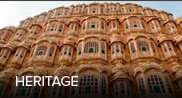
West Bengal is as much a historical destination as a cultural one, and there are several cities where you can observe its fascinating past. The various structures dotting these towns and cities trace their origins to the medieval and colonial era. One of these is Murshidabad, a city famous for its silk and its opulence. There are several places of historical interest like Hazarduari Palace, Nasipur Palace, Nizamat Imambara, Jahankosha Cannon and Khosh Bagh.
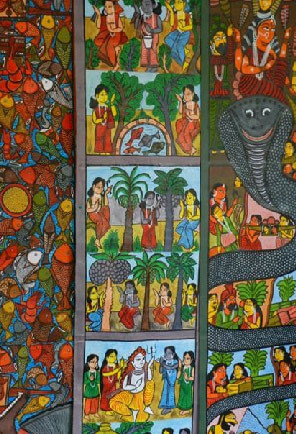
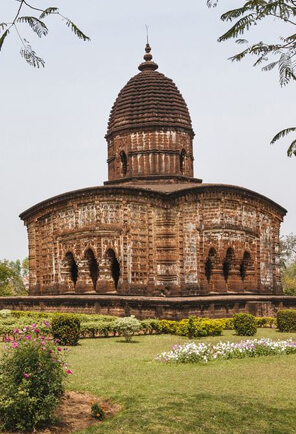
Bishnupur is a place not to be missed if you are an art lover. It is famous for its terracotta work, many of which depict scenes from the Ramayana and Mahabharata. The places of tourist interest here are Jorebangla Temple, Madan Mohan Temple and Dalmadal Cannon, which was built by the Malla kings to fight various invasions. If you wish to explore historical places, then Malda is the right place. It boasts a rich history and heritage, with the two most famous places being Gaur and Pandua. Historical monuments in Gaur include Bara Sona Mosque, Dakhil Darwaza, Gomit Gate and Firoz Minar. Your cultural tour in West Bengal is incomplete without visiting Cooch Behar in North Bengal. The most famous attraction is the Cooch Behar Palace, Madan Mohan Bari, Kamteswari Temple, Baneshwar Shiva Temple and Madhupur Dham Temple.












 Plan Trip
 Call Us
 Packages
 Home
Home