|
Indian
States
Arunachal
Pradesh
|
Wildlife
Location:
Arunachal Pradesh
Coverage Area: 1,985-sq-kms
Significance: Largest National Park Of The Northeast Region
And One of The largest Wildlife Protected Areas In India.
Best Time To Visit: October To April
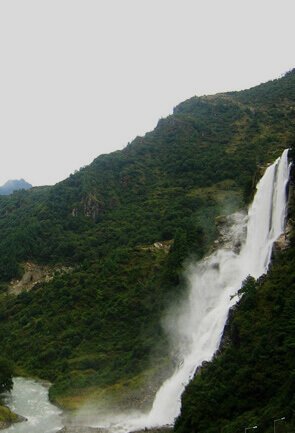
Primeval Wilderness
It is now a legally protected area having been designated in 1983
as the Namdapha National Park under Wildlife (Protection)
Act. The same year, it was also declared as a Tiger Reserve under
project tiger. With a total area of 1,985-sq-kms, this is the largest
national park in the Northeast and one of the larger protected areas
in the country.
The
farthest part of India in the northeast is named after the rising
sun. Rightly so, because it is here every
morning that the first rays of sunlight strike the Indian subcontinent
heralding a new dawn of activity and expectations. This is the state
of Arunachal Pradesh endowed with natural and cultural attributes,
which make it verily a fantasyland. Here, forests and wilderness
predominate in exuberance, extent, density and diversity, which
is indeed rare and unique.
While
the whole setting is fabulous, one area stands out far above the
rest on account of its natural beauty and supreme wilderness. This
is the area at the extreme end of Changland district In Arunachal
Pradesh, bordering Myanmar (Burma) on two sides and watered
by the Noa-Dehing and Namdapha Rivers.
The
Uniqueness Of Namdapha
Certain aspects of Namdapha make it truly unique. The first is the
altitude, which varies around 200 metres (nearly sea level) in the
valleys to more than 4,500 metres with snow covered mountain peaks.
Perhaps no other national park in the world can boast of such phenomenal
altitudinal variation. As a result, the climate conditions inside
the area are equally varied and unpredictable.
Though
located at 27 degrees north of the equator and hence being in the
sub-tropical zone having a tropical climate, the higher parts of
the reserve, which are mountainous, and rugged experience cold and
temperate conditions round the year. Similarly, rainfall is very
variable - excessive in the tropical part and scanty in the higher
reaches.
Himalayan
Background
Another unique feature of Namdapha is its location at the junction
of the Indian subcontinent's bio-geographic region and the Indo-China
bio-geographic region. The whole area is part of the eastern Himalayas,
which were formed, in the tertiary age across the gateway linking
the Indian landmass with the pale Artic and the Indo Malayan realms.
It
was through this gateway, prior to the formation of the mighty Himalayas
that several faunal elements from both the aforesaid realms gained
entry into the Indian subcontinent in the remote past which has
undoubtedly added to India's spectacular biological diversity. Besides,
its location at the farthest end of the country where it forms the
national border with Myanmar on two sides, gives a certain strategic
significance, which is on going and will always remain so.
Bio
Diversity
Namdapha's amazing biography is matched by the tremendous
variety of life forms found there, the sun total of which, in scientific
language, is called biological diversity, in short bio-diversity.
Both the floral and faunal aspects of Namadapha's bio diversity
are rich, varied and dazzling.
For
instance, the vegetation varies from the wet evergreen tropical
and sub-tropical forests to temperate and alpine forests. About
150 species of trees have been identified which include Dipterocarps
like the Hollong growing up to 50 metres. The floral species' richness
and composition are very impressive indeed and show density, variation
and endemicity, which may have few parallels. This includes a rich
gene pool of indigenous crop plants along with their wild relatives
and ecological variants such as the wild banana, citrus and mango.
A formidable list of medicinal and ornamental plants including the
wild orchids can be also be made.
It
is to be noted that all this information is based on what is known
so far, which is undoubtedly far less than what is not known to
science so far. Considering the fact that most of the Namdapha
national park is inaccessible and unsurveyed, the secrets of
botanical wealth that lie hidden there is anybody's guess. This
factor has to be kept in mind always and cannot possibly be under-played.
Fauna
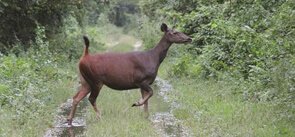
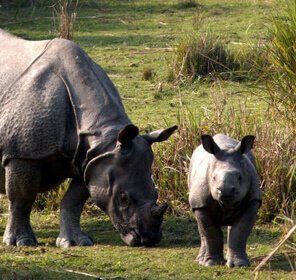
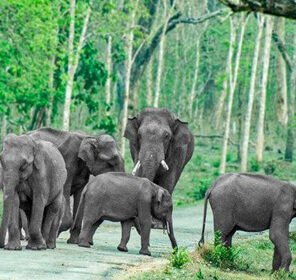
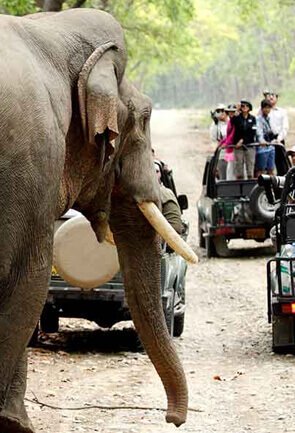
The faunal assemblage in Namdapha is equally staggering.
Of a total of 135 kind of land mammals found in India, as many as
75 kind are represented in Namdapha which no other reserve in the
country can match. An admixture of several Indo-Chinese and some
Palearctic elements is clearly evident. Perhaps the richest assemblage
is in the order carnivora with 22 kinds identified in Namdapha and
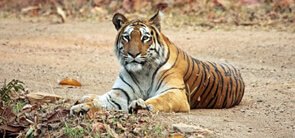
it is surely the only protected area in the world having four big
Cats- Tiger, Leopard, Snow Leopard and Clouded Leopard.
In
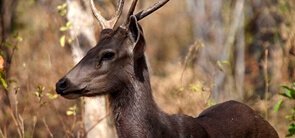
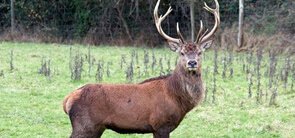
herbivores also, the variety is amazing considering that apart from
several Deer species, Namdapha is home to the bison as much as to
the Himalayan Tahr and the Bharal. Besides, it has all the three
Goat Antelopes found in India - Goral, Serow and Takin.
Primates
Amongst primates, it is the habitat of the rare and endangered Hoolock
Gibbon, the only Ape species found in India. The different species
of flying squirrels include one that is endemic which has been named
as the Namdapha Flying Squirrel.
Avifauna
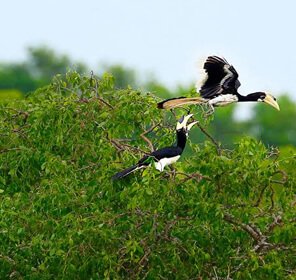
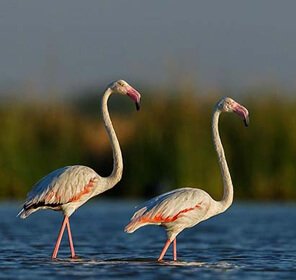
The bird life in Namdapha is easily the most dazzling with numerous
beautiful species of Avifauna. Some notable ones are the great Indian
Hornbill - Arunachal's state bird - the rare white winged wood duck,
several colourful Pheasants and other species.
This
is Nature and wilderness in its pure, pristine form, which must
be safeguarded for posterity under any circumstances. The plain
truth is that there is no other Namdapha and no human ingenuity
can possibly remake even an iota of it if any part is lost or destroyed.
HOW
TO GET THERE
A major factor contributing to the wilderness of Namdapha is its
remoteness and inaccessibility.
Air:
The nearest point of entry via air is the airport at Dibrugarh,
Assam.
Rail: The rail station is situated at Tinsukia in Assam.
Road: From Tinusukia or Dibugarh, the journey to Miao, headquarters
of the National Park and the Tiger Reserve, has to
be done by road, over a distance of 150-km. Then, a forest road
stretching over around 28-km gives access to the protected area
up to a place called Deban, which has a lovely forest rest house
and some other accommodation for the field staff. Beyond this area
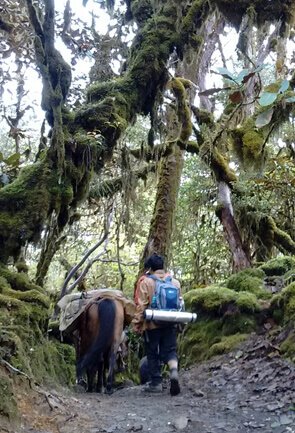
there is no road as such and all movement inside the reserve has
to be on foot through dense forest and steep hill ranges with streams
and rivers flowing in between.
|